There is a distinct difference between the version of the year we map out in our heads and the version we actually live through. If the last six months have taught us anything, it’s that life doesn’t care about our carefully structured timelines. We’ve reached the halfway mark of the year, and instead of just auditing our productivity or staring at a checklist of uncompleted goals, it’s time for a much more important check-in: how are we actually doing, and what do we need to do to protect our peace moving forward?
Depending on how your year has gone so far, that realization might bring a wave of pride or a slight knot in your stomach. For most of us, it is a messy mix of both.
This mid-year milestone is the perfect time for a pit stop. It is a moment to look in the rearview mirror, check the map and figure out how to drive through the second half of the year with intention. Let’s talk about how to reflect honestly, how to adapt when tragedy completely upends our path, how I am tracking against my own goals and what we can all do to protect our mental health while navigating the uncertain times ahead.
Adapting to the Unexpected
With the start of the new year on the horizon, I had a list of goals that felt ambitious and exciting. I promised myself I would begin my Master’s program, stay consistent with my fitness routine, build better financial habits, organize my Pokemon collection and work on my new portfolio website. But to truly understand the trajectory of my year, I have to look back at how it actually began. Life has a sudden way of completely rewriting our schedules, priorities and minds in an instant.
I was at the Emerald Square Mall doing some holiday shopping when I got an automated phone call… an active shooter was on the Brown University campus. The sheer panic and anxiety of that moment is something I’ll never forget. By the time I made it home, my social media feeds were flooded with information and the terrifying events were unfolding right in front of my eyes.

The tragedy of the December 13th shooting left a profound mark on my team and the entire Brown community. It shook us all to our core. Suddenly, the project timelines we had mapped out for December and January did not matter in the same way. We had to pivot immediately, adapt our priorities and focus on supporting each other through the shock and grief.
On a cold December 16th I came back to campus to pay respects at the Van Wickle Gates. A memorial with candles, flowers and photos continued to expand as news crews and police cruisers occupied the area… it was real, seeing it in person, talking with community members and even offering support to a Ph.D. student that was having a difficult time. It puts things into perspective when you spend an hour observing a memorial seeing friends hug and embrace each other as they take their own moments of silence. It’s one thing to see a shooting on the news, but so very different when it happens where you work.

It has been an incredibly challenging period, but we all continue to persist. The resilience of the Brown community and the unwavering support within our team became the foundation for how we’ve approached this year. It reminded us that plans are flexible, but looking out for one another is non-negotiable.
Amidst the darkness of that event, there was also a beautiful, unexpected silver lining. The tragedy allowed me the time and space to reconnect with old friends who reached out from all corners of my life just to check in on me. It was a powerful, grounding reminder of the fragility of life and the immense importance of three simple words: “I love you.” We do not say them enough, and we should not wait for a tragedy to remind us to do so.


Overthinking, Communication and Patience
Because of that intense start to the year, my personal priorities shifted. I realized that my mental health needed serious protection. But while I’ve made a lot of progress in showing up for myself, I want to be entirely honest about something I am still actively working to be better about: overthinking and impatience in my relationships.
It’s so easy to fall into the trap of creating endless possibilities, worst-case scenarios and anxieties in your mind that are not actually happening in reality. For me, this often flares up when communicating with others. It can be incredibly taxing when you want an answer, are waiting to hear back from someone or feel like you’re being completely ignored. Your mind starts spinning, creating stories about why they haven’t replied.
This year has been a massive, ongoing lesson in practicing patience with my friends, family and coworkers. I have had to remind myself that while communication and check-ins are good, everyone is dealing with life at their own pace. Just like you have heavy days, other people are managing their own hidden battles, busy schedules and mental loads. You have to let them do their thing and try not to rush things if you don’t have to.
I used to think I had to fill every single moment of my day with messages and texts. Honestly, it is not healthy. Constantly glued to a screen out of anxiety does not make you a better friend or a better worker. It just drains you. I am learning to let some things be, letting go of the things I cannot control and focusing my energy on bringing about the actual, tangible change I can control for myself and for others.
Reclaiming My Focus
Beyond my relationships, my internal battle with impatience forced me to confront a deeper problem: my ability to pay attention. Like so many others, I found myself constantly distracted, unable to sit with my own thoughts for long before reaching for a screen.
Diving into Johann Hari’s book Stolen Focus and learning how to think deeply again completely changed my perspective. It forced me to drastically reevaluate my own relationship with social media and technology. For a long time, I blamed myself for my short attention span, but reading up on the mechanics of modern technology showed me how engineered this distraction really is.
Looking through the data compiled in the Ledger of Harms by the Center for Humane Technology was a massive eye-opener for me. Seeing the systemic reality of how these platforms are built to exploit our psychology made me realize just how deeply I had fallen into the trap. I was reaching far too much for my phone; not because I actually had something to do, but as an automatic, subconscious reflex.
Because of that constant connectivity, I wasn’t taking the time to genuinely relax. My brain was always “on,” buzzing with digital noise right up until the moment I tried to close my eyes. I had to step back and start building better habits, particularly when it came to my sleep hygiene. I realized that treating my bed as a place to lie down and scroll through notifications was ruining my rest. I’ve had to enforce a strict boundary with myself: practicing real sleep hygiene means not getting into bed until I am actually tired, keeping the bedroom a sanctuary for sleep rather than a doom scroll coffin.
Mental Health and Filling Your Cup First
Slowing down and breaking that exhausting cycle of overthinking required me to introduce mind wandering activities into my daily routine. I started experimenting with intentional boredom. I began walking without headphones, using the Finch app regularly and staring out the window with my morning coffee. I let my mind drift without a destination or a task to complete.
The results genuinely surprised me. Giving my brain space to just wander acted as a pressure valve for my stress. Instead of constantly consuming information, my brain finally had the space to process heavy emotions, untangle complex problems and spark unexpected creativity. It taught me the value of being present in life rather than just rushing through it. When my anxiety levels spiked and things started to feel overwhelming I leaned on the 5-4-3-2-1 exercise to ground myself.
- 5 things you can see: Look around and name five visible details
- 4 things you can touch: Focus on physical sensations
- 3 things you can hear: Listen for nearby or distant sounds
- 2 things you can smell: Notice scents in the air or grab something nearby to sniff
- 1 thing you can taste: Focus on the current flavor in your mouth
What’s nice about this technique is that you can do it almost anywhere and you can always flip flop your senses around depending on the environment. It helps by anchoring your awareness in the moment.
Through all of this, I realized the absolute necessity of filling your own cup first. Taking care of your own well-being is not selfish. If your own cup is empty, you have absolutely nothing left to pour into the people you care about. When you take the time to fill your own cup, you are in a much better position to support, love and lift up the people around you. That is why finding time for therapy and protecting my peace became non-negotiable.
The Mid-Year Soundtrack
When things got heavy during the first part of this year, I leaned heavily on music to help me process everything. Sometimes, when you don’t have the capacity to articulate what you’re feeling, a melody or a specific arrangement can hold you together.
By this time of the year, I usually have a near-full playlist of music—songs that helped me get by or completely defined the year so far. This year looks a little different, and it’s completely okay that I only have a couple of songs on rotation right now. I have a whole six months left to make a playlist that, when December rolls around, will make me look back and say, “You really did it, Josh. You got through all that scary stuff and you are doing just fine.”
Right now, that soundtrack is anchored by two artists I’ve followed since early high school. It’s funny how the musicians you grow up with can continue to follow and mirror the trajectory of your own life decades later.
- “Death Grip” by Andrew McMahon in the Wilderness: This track became a vital reminder for me when the anxiety of overthinking threatened to take over. It taught me that waves really are just waves… they crest, they crash, and they pass through your space, but they don’t have to pull you under.
- “Stone over Water” by Death Cab for Cutie: This song perfectly captures the weight of patience and learning to let things be. It grounds me when I feel the urge to rush outcomes or freak out over radio silence, reminding me to breathe and just keep trying to take that first step.
What Helped Me See My Goals Through
Despite the heavy start to the year and the shifting workplace realities, I managed to stay fairly consistent with my professional milestones. I’ve hit some of my targets and shifted some of my schedules around this year. My goals haven’t all been accomplished to the fullest extent, but I’ve been able to make progress in the first half of this year.
That success did not happen by accident, and it did not happen through sheer willpower. It happened because I changed how I interact with my goals. With that change also came a great deal of adaptation and realizing that my goals can’t always be my top priority.
Learning to adapt to life and what it throws at you is hard. Frequently, in order to achieve what we want, other obstacles and goals form along the way. It’s always okay to put things on pause for the priorities that matter. Family has been a big focus for me this year more than it has in the past.
No matter how meticulously you plan, life has an uncompromising way of forcing you to reorder your priorities. This year in particular, I have been navigating a heavy wave of family issues, from planning care for our family cat, bringing my dad into Boston for his cancer treatments, supporting my sister while she has dealt with mental illness and most recently, watching my grandmother decline and enter a nursing home.
It has not been easy. There were days when the emotional and mental load felt entirely overwhelming, days where my professional ambitions simply had to take a back seat to the people I love. My goals have had to change, shift and reshape themselves around these realities. But there is a massive difference between rewriting a goal and giving up on it. I haven’t given up on the things I set out to achieve at the beginning of this year; I’ve just learned how to carry them through the storm.
When your external reality gets chaotic, keeping your internal compass steady becomes survival. If you want to see your goals through when life is actively trying to derail them, you have to bring them into your physical reality. Here is what worked for me:

Writing them down: There is something psychological that shifts when you take an idea out of your head and put physical ink to paper. It turns an abstract thought into a commitment.
Keeping them visible: If your goals are buried in a closed notebook, you will forget them. I put mine right on my desk and on my bathroom mirror where they constantly stare back at me every single day. In moments of chaos, they act as a visual anchor.
I also realized that goals shouldn’t just be about output or professional metrics. I had to make time to work on my professional tasks, but I also had to intentionally work on my soft skills. Navigating cancer treatments, mental illness and aging family members requires an immense upgrade in empathy, active listening and patience. Developing these skills has become just as important as any milestone on my resume.
Accountability and Grace
Accountability has a bit of a bad reputation. We tend to treat it like a strict boss standing over our shoulder with a clipboard, waiting for us to make a mistake. But real, healthy self-accountability is actually an act of kindness. It is about looking at your life and saying, “I care enough about my future self to check in on how I am doing.”
Showing up for yourself does not just mean grinding out your to-do list. It means holding yourself accountable to your peace of mind. True accountability also requires a massive dose of grace. Do not beat yourself up if you do not do everything you want to do every single day. Consistency is about the big picture, not a perfect daily scorecard. If you fell short on a goal, you get to decide if you want to keep trying for the next six months or if you need to pivot.
6 Ways to Reset Right Now
If you are ready to look at your own resolutions and breathe some fresh life into them, you do not have to wait until next January. You can start today. Here are six practical strategies to help us all get back on track while keeping our sanity intact.
1. Break Down Intimidating Goals
If your goals feel too large, vague or intimidating, you will naturally procrastinate on them. Instead of focusing on a massive end result, break them down into the smallest possible pieces that you can achieve. If your goal is a huge project, focus on the first task. Small actions build momentum, and momentum builds habits.
2. Advocate for Yourself and Lift Others Up
We cannot navigate uncertain times in isolation. We need to actively advocate for ourselves and the people around us. Make it a point to support your friends and encourage the people you see doing good. Send a quick Slack message to a co-worker saying, “I see you grinding, and you are doing an amazing job.” Write a physical letter to a friend just to check in.
3. Share Your Struggles
Vulnerability builds the bridges that keep us connected. Do not be afraid to tell your friends, family or your professional network that you are struggling if you are. We often hide our difficulties because we think everyone else has it figured out, but opening up allows others to show up for you the same way you show up for them.
4. Protect Your Social Battery
In a world that constantly demands our time, energy and attention, learning to say no is a survival skill. Try not to stretch yourself so thin that you have no energy left for yourself to just exist. Protect your social battery fiercely. It is completely okay to turn down invitations or log off early simply because you need to recharge.
5. Schedule Your Well-Being First
We often schedule our meetings, our appointments and our chores, but we leave our well-being up to chance. You will never just find the time; you have to make it. Block out time in your calendar for therapy, for a quiet walk or for dinner with people you love. Treat those blocks like unmovable commitments.
6. Run a “Keep, Drop, Tweak” Audit
Go back to the list of goals you made at the start of the year. Look at each one individually and filter it through three categories:
- Keep: The goals that still resonate with you and just need continued effort.
- Drop: The goals that no longer fit your life, your energy or your values. You are allowed to cross things off the list permanently if they are draining your mental health.
- Tweak: The goals that were disrupted by unexpected life events or overambitious planning. Change the scope so they actually fit your current reality.
The Second Half is Yours to Write
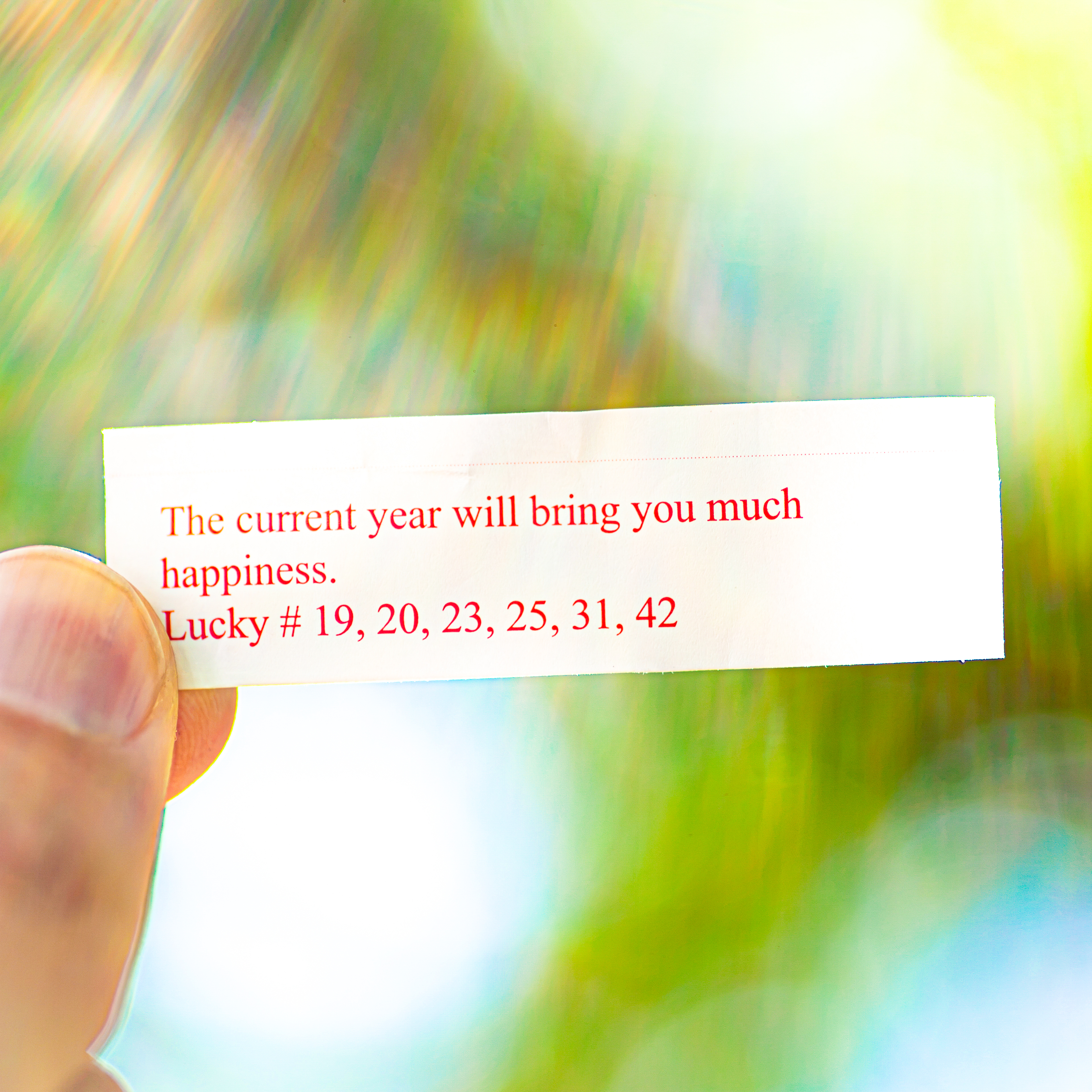
Just yesterday, right in the middle of drafting this reflection, I opened a fortune cookie. The little slip of paper inside read:
“The current year will bring you much happiness.”
There is a profound, almost funny irony in getting a message like that when you’re deep in the weeds of processing family health crises, campus trauma and personal burnout. At first glance, it felt out of place. But the more I stared at it, the more I chose to see it as a small sign, a gentle reminder of luck, fate, or a quiet anchor whispering that, despite everything, it is all going to be okay.
We still have six full months left in the year. That is plenty of time to build new routines, learn new skills, heal from hardships and make significant progress. The first half of the year is already written, and we cannot change the challenges we faced or the moments we stumbled. But the second half is our canvas.
Let’s stop waiting for the perfect moment, the perfect Monday or the next New Year to start working toward the things we want. Be gentle with yourself for the goals that slipped through the cracks, celebrate the resilience that got you through the tough moments and let’s make the rest of this year about truly showing up for ourselves and each other.

Before you close this tab and step back into the digital noise, take a second to look past your to-do lists and your uncompleted goals. Ask yourself honestly: how are you, and are you doing okay? If the first half of this year required more survival than progress, or if you’re currently carrying heavy things in silence, please know you are not alone. Drop a comment below and let me know where your head is at. I’d love to hear your story so we can check in and navigate the rest of this year together.
Leave a Reply